
What check-ups do senior dogs and cats need?
Does your dog take longer to get up, or has your cat stopped climbing to their favourite spots? Have you noticed small changes, even though they still eat and seem well? As pets get older, it is worth discussing these changes with your vet and checking their health more often.
Senior dogs and cats need more thorough veterinary monitoring, tailored to their health. A physical examination, routine blood tests and an oral examination help detect problems that may go unnoticed at home.
At our veterinary centre in La Sagrera, Barcelona, we assess your dog’s or cat’s needs and plan their check-ups according to their health.
When is a dog or cat considered senior?
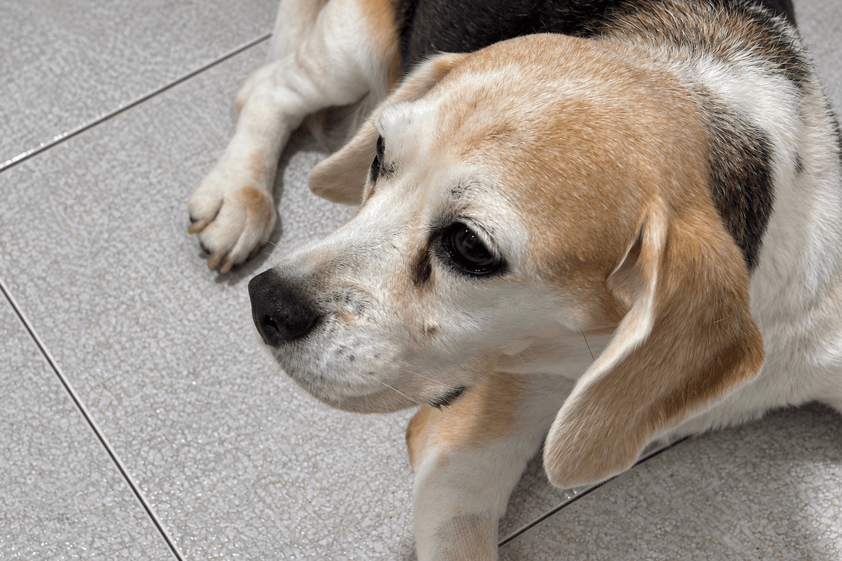
In dogs, size and breed matter: large dogs generally reach this stage earlier than small dogs. Cats over ten years old are considered senior, although closer monitoring may be useful earlier if changes or risk factors appear.
You do not need to wait for obvious difficulties. Your vet can advise you on when to begin closer monitoring and which checks are appropriate.
What is their equivalent age in human years?
These tables give an idea of how dogs and cats age. The figures are approximate equivalents in human years; they do not predict lifespan or determine, on their own, which tests a pet needs. The dog weight groups are approximate and rounded.
| Dog’s age | Small dog Up to around 9 kg | Large dog Around 23 to 41 kg |
|---|---|---|
| 6 years | 40 | 45 |
| 8 years | 48 | 55 |
| 10 years | 56 | 66 |
| 12 years | 64 | 77 |
| 14 years | 72 | 88 |
| 16 years | 80 | 99 |
| Cat’s age | Human years |
|---|---|
| 6 years | 40 |
| 8 years | 48 |
| 10 years | 56 |
| 12 years | 64 |
| 14 years | 72 |
| 16 years | 80 |
Source: age comparison chart available from the AAHA. Multiplying age by seven does not reflect these differences.
How often should they see the vet?
At this stage, a check-up every six months is often advisable, with the schedule tailored to each patient. Illness, medication or new changes may mean an earlier visit is needed.
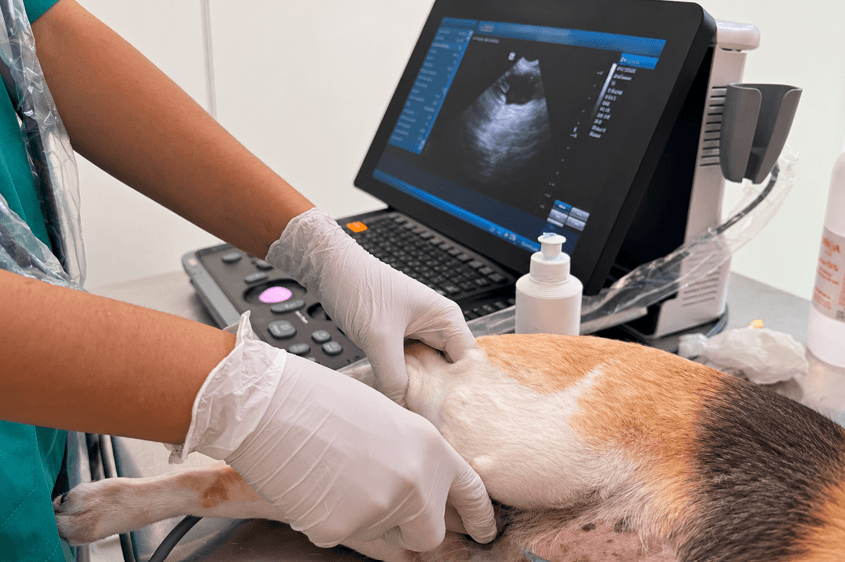
At Animal Salut, we recommend routine blood tests at least once a year for senior dogs and cats. In some cases, they should be repeated after six months or sooner, depending on the results and progress. To complete a geriatric assessment, a urine test and an abdominal ultrasound may also be needed, depending on the examination, medical history and results. Urine testing complements blood tests; ultrasound helps assess the structure of the abdominal organs. Visits and different tests may follow different schedules.
These recommendations are consistent with the AAHA senior care guidelines, which suggest blood and urine testing every six to twelve months, adjusted to each case.
What do we check during a senior pet consultation?
As well as examining your dog or cat, we ask about their daily life: whether they drink more, whether their appetite has changed, how they walk and sleep, and whether their behaviour is different. Based on what you tell us and how your pet looks, we ask further questions to explore relevant changes. The conversation and examination help us decide what each patient needs.
The check-up covers weight and muscle condition, mobility, the mouth, skin and lumps, along with listening to the heart and lungs and feeling the abdomen. Depending on the findings, further checks such as measuring blood pressure may be recommended.
Bring previous reports and a list of their medicines and supplements. A video of their walking or a behaviour that worries you can also help us assess what is happening.
Routine blood tests: kidneys, glucose and thyroid hormones
Tests are chosen according to the species, medical history and examination. The assessment may include:
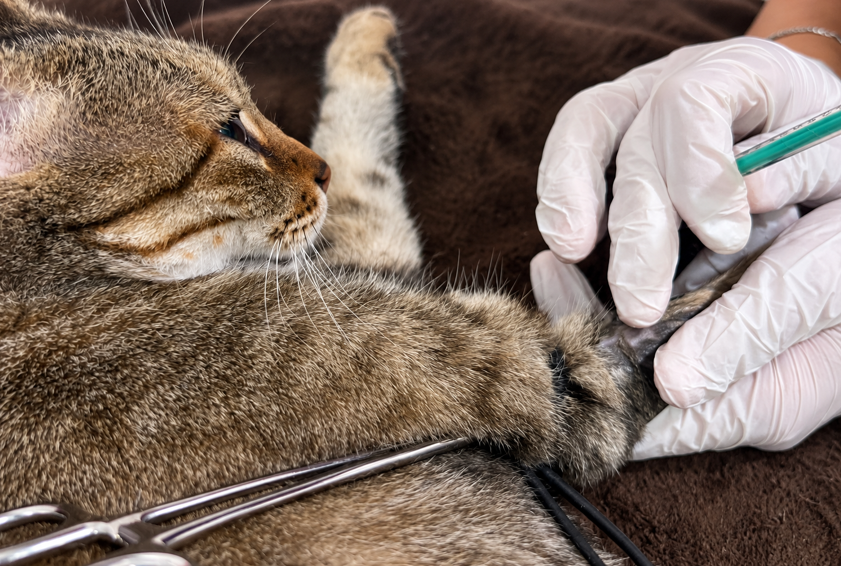
- Complete blood count: assesses blood cells and detects changes such as anaemia.
- Kidney markers: urea, creatinine and, when indicated, SDMA help assess the kidneys. Urine testing may also be needed to interpret their function.
- Glucose: helps investigate blood sugar abnormalities, including diabetes. A single result is not always enough for a diagnosis; stress can temporarily raise glucose in cats.
- Thyroid hormones: T4 is particularly relevant in senior cats when checking for possible hyperthyroidism. In dogs, tests are interpreted according to the suspicion of hypothyroidism and further testing may be needed.
- Other values: liver markers, proteins and electrolytes, depending on the requested panel.
Comparing results with earlier tests helps assess progress. Normal blood test results do not rule out every disease.
You can read more in our article on when to arrange blood tests for a dog or cat and find out about our veterinary laboratory service.
Oral health in senior dogs and cats: teeth and gums
Both dogs and cats need oral examinations. At this stage, teeth and gums deserve particular attention. Tartar, inflammation and damaged teeth can cause discomfort even if your pet continues eating.
Cats can also develop gingivitis, which is inflammation of the gums, and other painful problems, such as lesions that damage the teeth. Gingivitis can occur at any age. Oral examinations are therefore part of their follow-up, even if there is little visible tartar. Treatment depends on the cause and the lesions; cleaning alone is not always enough.
Persistent bad breath, bleeding gums, difficulty chewing or dropping food are reasons to have the mouth checked. The frequency of dental cleaning depends on oral health and care at home; there is no single schedule for every pet.
When indicated, veterinary dental cleaning is carried out under general anaesthesia so that appropriate treatment can be provided. Age alone does not prevent dental cleaning: your pet’s health, the necessary tests and individual anaesthetic risk are assessed beforehand.
At Animal Salut, we can examine their mouth and assess whether dental cleaning or other treatment is needed. See our surgical service.
Changes to discuss before the next check-up
Arrange an assessment if you notice increased thirst or urination, weight loss, reduced appetite, repeated vomiting, difficulty getting up, less interest in walking or jumping, disorientation or behavioural changes. Avoid automatically putting these down to age.
Difficulty breathing, collapse, severe pain or trying to urinate without passing urine require immediate care at a veterinary hospital. Do not wait for the scheduled check-up.
Can the check-up take place at home?
A home visit may help some senior dogs and cats who have difficulty travelling or become distressed during transport. At Animal Salut, we can carry out the examination and, when the case allows, collect a blood sample and perform an abdominal ultrasound at home. When arranging the visit, we assess which tests are needed and which can be done at home.
If tests or procedures need specific facilities, such as dental cleaning, we will explain how to continue care at the centre.
Frequently asked questions
Do they need check-ups if they seem healthy?
Yes. Appearing well does not replace a preventive examination. Follow-up helps assess changes and decide which tests are needed.
Are annual blood tests enough?
This is the minimum we recommend as a general guide for senior pets. Their health and results may mean more frequent testing is needed.
Is a urine test needed if we are already doing blood tests?
It may be. Urine provides complementary information, especially when assessing the kidneys and certain metabolic changes. We will explain whether a sample is needed and how to collect it.
Does every senior pet need an ultrasound?
An ultrasound is recommended according to the medical history, examination and results of other tests. It may form part of a geriatric assessment when the abdominal organs need a closer look.
Do cats need dental cleaning too?
Yes, when indicated. Cats can develop gingivitis and other painful dental problems. We examine the mouth first to decide whether cleaning, other treatment or further tests are needed.
Are they too old for dental cleaning under anaesthesia?
Age alone does not rule it out. Their health, pre-anaesthetic tests and expected benefits must be assessed. The risk and anaesthetic plan are considered individually.
Can a geriatric assessment be done at home?
In many cases, we can carry out the check-up, collect blood and perform an abdominal ultrasound at home. If further tests or a procedure require specific facilities, we will arrange the next steps at the centre.
What can I do at home?
Observe their habits, make water, resting places and the litter tray easy to reach, and adapt activity to their mobility. Ask how to care for their mouth, and avoid changing medication or giving human painkillers without veterinary advice.
At Animal Salut, we support senior dogs and cats through check-ups at our La Sagrera centre and home visits when appropriate. Our vets are registered, and our centre is registered with the Official College of Veterinarians of Barcelona (COVB).
Book an appointment or ask us your questions
If your dog or cat is getting older, we can check their health and plan their next assessments. Tell us about any changes when booking the appointment.
Veterinary centre
Calle Olesa, 67 · La Sagrera, Barcelona. For a physical examination, routine blood tests and an oral health check.
Home veterinary visits
Check-ups, blood sampling and abdominal ultrasound in Barcelona and the surrounding area when your pet can be cared for at home.
Advice and report review by video consultation
We can discuss reports and questions about their care. A video consultation does not replace a physical examination or allow diagnostic tests to be carried out; it is not for emergencies.