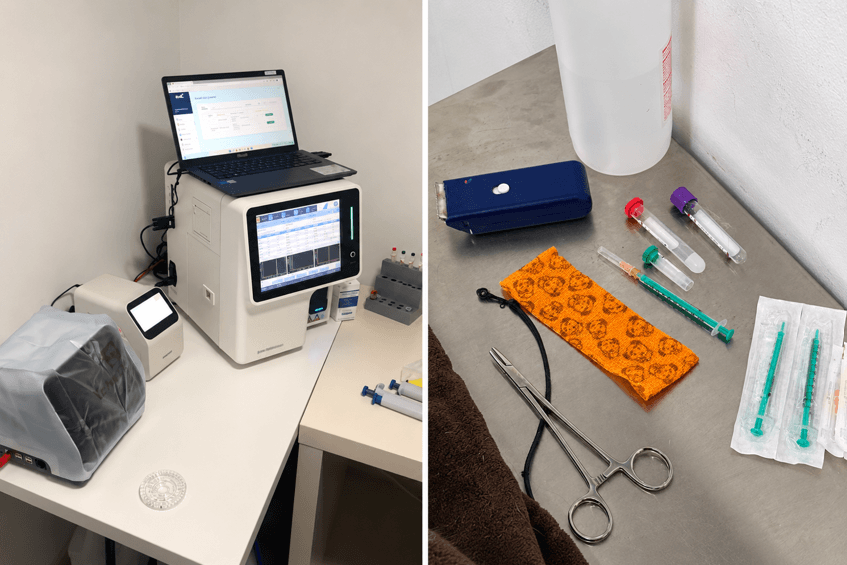
When should a dog or cat have a blood test?
Your cat is drinking more water than usual, your dog has lost weight, or a blood test has been suggested before a procedure. It is natural to wonder whether the test is necessary and what it can tell you.
A blood test can help guide a diagnosis, monitor a condition, or assess an animal before anaesthesia. It can also be useful during a preventive check-up. As a general guide, we recommend an annual blood test, with the tests and follow-up tailored to each dog or cat’s symptoms, age, medical history, medication and physical examination.
When might a blood test be recommended?
When you notice a change in your pet’s health
Weight loss, reduced appetite, increased thirst or urination, repeated vomiting, persistent diarrhoea, tiredness or changes in behaviour are reasons to arrange a veterinary assessment. Depending on the examination, a blood test may help us investigate what is happening. The first step is to assess the animal, rather than choose a test yourself.
In cats, it is particularly useful to notice subtle changes, such as eating less, losing weight or drinking more. Even if your cat otherwise seems to be going about its normal routine, mention these changes at the appointment.
During preventive check-ups, especially for older pets
A check-up allows us to compare your pet’s current health with its medical history. As a preventive guide, we recommend a blood test every year, even when the animal appears well. Age matters, but it does not by itself determine which tests to request. Depending on the findings, risk factors and earlier results, some pets may need more frequent monitoring or a different plan.
Before anaesthesia or certain procedures
Pre-anaesthetic blood tests provide information that helps plan the procedure and identify changes that may need further investigation or an adjustment to the plan. Normal results do not remove every anaesthetic risk: the physical examination, medical history and planned procedure also matter.
To monitor a condition or medication
For pets with long-term conditions or certain treatments, blood tests can help us assess progress and plan follow-up. Which tests are needed, and when blood should be collected, depend on the particular condition and sometimes on when medication is given. Do not stop or change a dose before a blood test unless your vet tells you to.
What can a blood test tell us, and what are its limits?
There is no single “complete blood test” that answers every question. Depending on the clinical concern, we may request:
- Complete blood count (CBC): looks at red blood cells, white blood cells and platelets. It can help identify anaemia and other changes in blood cells.
- Biochemistry profile: measures substances such as glucose and proteins, as well as markers related to the kidneys and liver. It helps assess changes in the body, but one result alone is not a diagnosis.
- Specific tests: hormone tests, tests for infectious diseases or other investigations may be needed according to the suspected problem.
We interpret the results alongside the examination, symptoms and previous tests. A result outside the reference range may need confirmation or follow-up; a result within the range does not rule out every disease. Sometimes a urine sample, imaging or another assessment is needed to understand what is happening. You can see the tests offered by our laboratory service.
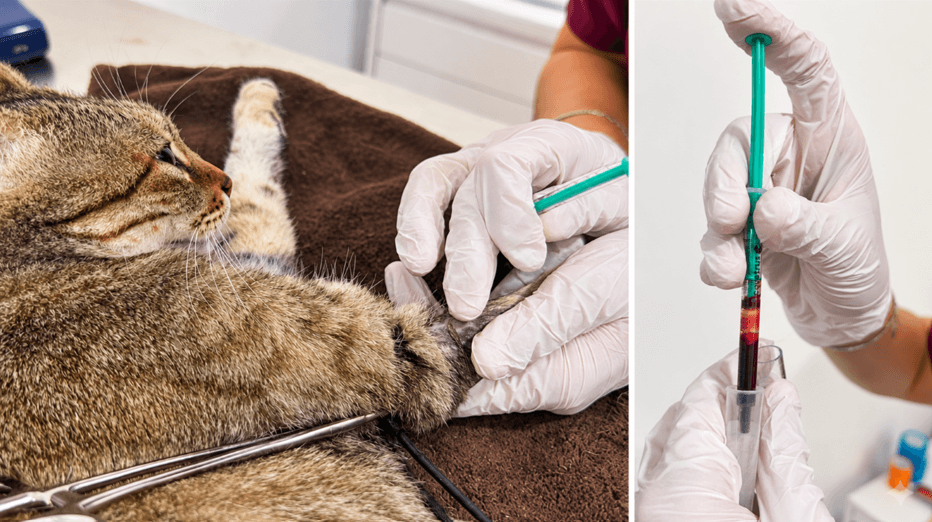
How is the blood sample usually taken?
A small sample is taken from a vein, often in a leg or the neck, depending on the animal and the tests requested. The team holds your pet gently, prepares the area and collects the sample. A little fur may need to be moved or clipped. Most animals can have the sample taken without sedation, but every pet reacts differently.
If your dog or cat has had a difficult experience, becomes very frightened or is hard to handle, please tell us before the appointment. This helps us plan the visit around your pet’s needs. In some cases, sedation may be needed to collect the sample safely and reduce stress. We make that decision after considering the animal’s health, behaviour and required test; sedation is not routine for every patient.
Can a dog or cat have a blood test at home in Barcelona?
Yes. Animal Salut can collect blood during a home veterinary visit in Barcelona and surrounding areas when appropriate for the case. This can be helpful for some pets who have difficulty travelling or become very distressed during transport. Being at home does not guarantee that a pet will accept handling, however, so please tell us how your dog or cat usually reacts before arranging the visit.
The possibility that sedation may be needed does not automatically rule out a home blood collection: we will assess how to arrange it for that animal. If other tests or care that cannot be provided at home are needed, we will explain the next steps at our veterinary centre in La Sagrera or, for an emergency, at a veterinary hospital. Home visits are by appointment and are not a substitute for urgent care.
Does my pet need to fast?
It depends on the tests and on the animal’s situation. Eating before a sample is taken can affect some measurements, while other tests have specific preparation requirements. When booking, ask our team how long your pet should go without food, whether water is allowed and what to do about any medication.
Do not impose a fast yourself, especially for a puppy or kitten, a pet with diabetes, an unwell animal or one that has already stopped eating. If your pet needs urgent assessment, do not delay it because they have eaten. Tell the vet when your pet last ate and let them decide how to proceed.
When should your pet be assessed without delay?
If your dog or cat has difficulty breathing, collapses, has seizures, is markedly weak, is bleeding heavily, has a very swollen abdomen or severe pain, vomits repeatedly and seems unwell, may have been poisoned, or deteriorates rapidly, seek immediate veterinary care. A cat that tries to urinate but cannot do so also needs immediate assessment.
In these situations, do not wait for a blood-test appointment: assessment and stabilisation come first. Animal Salut does not provide 24-hour emergency care. If we cannot see your pet immediately or the centre is closed, go to an emergency veterinary hospital.
Frequently asked questions
My dog or cat seems healthy. Is a blood test still useful?
It can be during a check-up, particularly when there is a relevant history or risk factor. We decide whether to test, and which tests to use, after assessing your pet. There is no identical plan for every animal.
Do normal blood results mean nothing is wrong?
No. They describe the parameters measured at that point in time. If symptoms continue, your vet may recommend further investigations or repeating a test.
Is a yearly blood test recommended?
Yes. As part of preventive care, we recommend considering an annual blood test. It lets us compare results with previous checks and may reveal changes that are not yet obvious at home. Your vet will decide which tests are appropriate at each check-up and whether your pet needs more frequent monitoring or a different plan.
Can my pet drink water before the test?
Water is allowed for many blood tests, but follow the instructions for the specific test requested. Check with us first if you have been given different preparation advice.
Is it better to have the test at the centre or at home?
It depends on your pet’s health and behaviour, the other tests they may need and whether the sample can be obtained safely. When you contact us, we can help you choose between the La Sagrera centre and a home visit.
What should I bring to the appointment?
If you have them, bring previous blood-test results and information about medication and symptoms: when they began, and any changes in appetite, thirst, urination or weight. This helps us select and interpret tests.